Rivera Amplification interviews Jay Graydon on his history with Paul Rivera's amps and mods during
Jay's LA session days in the late 70's. The interview is in 2 parts below. Enjoy!
Paul Rivera Jr of Rivera Amplification gives an in-depth interview of session guitarist legend Jay Graydon. Jay speaks about how his
famous Steely Dan "Peg" solo came about, how it was to be a top A list session player back then, how the record business has changed, the
importance of tone, his signature amp, stories of Cheap Trick, etc.
for MusicBizAdvice.com. James Auburn is a
keyboardist, musical director, arranger, educator, and all-around audiophile. He's also the co-founder of the Boston Hip Hop
Alliance. Recently James caught up with Jay Graydon, and here's the resulting e-mail interview
This link
will take you away from the Jay Graydon web site, so to get back again after checking out the HOME
RECORDING MAGAZINE website you just hit the BACK button in your browser.
An interview by Will Minting with JAY GRAYDON for the TOTO 99 ONLINE COMMUNITY, with
the main theme being Jay's connection to Steve Lukather of TOTO.
Jay Graydon is a legendary Los Angeles based studio musician, session guitarist, writer and producer. When other studio
legends had tried and failed to meet Donald Fagen & Walter Becker's seemingly impossible expectations, Jay famously
nailed the "Peg" solo on Steely Dan's Aja album. Jay won a Grammy for his co-writing of "Turn your love around" with
Luke and Bill Champlin, which became one of George Benson's biggest hits. Jay was instrumental in getting Luke started
on the session scene in the mid 1970's when he recommended his own clients to the teenage Lukather, who as we know
rapidly emerged as an equal to the likes of Jay, Larry Carlton, Dean Parks, Ray Parker Jnr, Lee Ritenour and other
legendary studio guitarists. Joseph Williams and Steve Porcaro have also worked extensively with Jay in recent years. Jay
remains one of the busiest studio musicians and producers on the West Coast and over recent months, we've emailed to
put together this fascinating insight into Jay's collaborations with the Toto guys and his own recent projects.
Interview by Alexis L. Berman for Planeta Rock in Argentina
Hi Jay is an honor for me to do an interview with you, because you are one of
most greats AOR musicians from North America.
Horale Alexis,
I thank you for the kind compliment!
You worked with Air Supply, Paul Anka, George Benson, The Carpenters, Cher,
Christopher Cross, Earth, Wind and Fire, Hall & Oates, and thousand musicians
more sine 1970. How is the secret of your successful?.
A slight amount of talent and being in the right place at the right time.
Here is a brief story regarding how things happened.
When I started playing the guitar at the young age of 14, I soon
realized my life would be in the music business. A few years later, I discovered that
studio musicians make a good living and that became a goal. Not only for the
fact the job pays well but also I like playing many styles of music. It is
most difficult to get into a position as to be a first call studio guitarist
since there is room for only a few in each era. I got lucky in the early 70s
since Dean Parks (a brilliant studio guitarist) liked my playing and recommended
me to a few studio contractors. I must have done a good job since I kept
getting work calls and in a short time period, I was working 2 to 4 sessions a day
for many years.
In the mid 70s, I started writing songs and I would record demos of the
songs. Since I was playing on many record sessions, I would give the demos to
the recording artists and producers and the artists recorded many of the
songs.
In the late 70s, I was approached by Steve Kipner asking me to produce
his record. That happened and after producing that record (Knock The Walls
Down), I started getting calls to produce other artists. That was the end of my
studio musician era and the beginning of becoming a full time songwriter and
record producer.
You made a lot of projects with orchestral bands, pop bands, swing musicians
and with Alice Cooper, the king of the glam rock. How was that experiences?
Because you it isn't your style of music.
As a studio guitarist, I played many styles so actually they are part of
my music ability. Also, I have produced artists that are pop, R&B, country,
and jazz. I humbly state am fairly rounded in many styles. I have also just
entered into a new style of music that is called "POPERA". A combination of pop,
opera, and world beat music. This is along the lines of Josh Groban. Bill
Cantos and I wrote a song in this style and I must say that the song is
outstanding.
Regarding Alice Cooper, here is a quick story. I once played on a
recording session for Garry Trudeau. The album was to generate money for a country
in peril. Garry writes a comic strip (Doonesbury) that is very famous in the
states and he put me in the comic strip as WAH WAH GRAYDON. He quoted funny stuff
I said on the sessions. When working with Alice, all night long Alice kept
asking me questions about the comic strip and Garry since he loved the comic
strip. Much fun!!!
"Grease", "Ghostbusters" and "Miami Vice" were some of much soundtracks that
you participle in your career. Are you preparing a new soundtrack at the
moment?
There are only a few soundtracks these days since record companies are in
trouble on account of internet music copying. Record companies only take
chances with major films that have major recording artists. In most cases, the
artists write the songs. I am not focusing on this area these days but I do
occasionally submit a song.
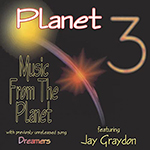
Why you decided to re-released the "Airplay for the Planet" and "Music from
the Planet" albums?. Were all the song recorded again?
No, but I did add a new song on each album and remastered as to make
sound better.
If anyone is interested in these new versions, go to jaygraydon.com
as to purchase. Also, I am releasing a new Planet 3 album in two months!!!
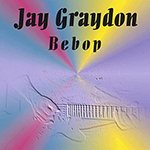
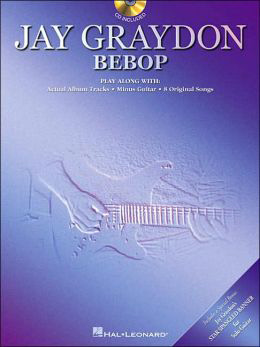
If you did not know, I recorded a jazz album entitled BEBOP. I also
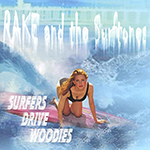
recorded a "SURF" album for fun (similar to the VENTURES and BEACH BOYS). Both are
available on jaygraydon.com
Is "After the Love is Gone" maybe the best song that you made in your career?
All songs are like children. I love them all.
What do you think about the actual music movement, where the good music
hasn't real spacious in the radios? Is economically suitable to do an adult album
at the moment?
It is all about demographics. Young people buy CDs and the adult market
does not buy as much. With that in mind, harder for an adult album to sell
well. There are exceptions but just a few.
You had participle in hundreds and hundreds albums. What are you recording o
doing at the moment?
I took a break for many years since working 14 hours a day became too
stressful. I now once again feel like working and am looking for producing gigs
with major artists. Maybe you should put me in contact with the major artists
in Argentina.
The adult rock like you, Steely Dan, Toto, Chicago, etc. had an extraordinary
success in the ´80 and part of the ´90 in my country. Why these kind of
groups never visited Argentina?
Regarding the artists you mention, you would need to ask them. Regarding
me as an artist, I would gladly do a concert tour with my band in Argentina.
Put me in contact with your best concert promoter and lets see if we can make
this happen.
Before I get to your last question, I should mention that my record
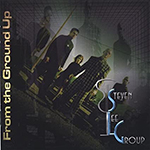
company, SONIC THRUST RECORDS has just released a smooth jazz album. The Steven
Lee Group "From the Ground Up" is great!!! Again, it is available at jaygraydon.com
I will be releasing many albums in the near future so if you like
quality music, please occasionally check out the web site from time to time.
Please Jay let a message for all argentine public, and was an honor for me to
do the interview. You are an icon in the Adult and Pop Rock for us.
It is an honor for me to do the interview since I am just some guy with
a little talent that got lucky. I am honored you like my music!!! I must say
that the music of your country is outstanding!!! Great rhythms with beautiful
melodic structure and romantic lyrics!!!!
One more thing. ALEX LERNER is an old friend. We spent some time
together a few years ago. Alex is a great talent!!!!!!
Your pal, Jay
Interview by Takashi Kanazawa for Jazzlife Magazine (Japanese only)
Hi Takashi, Here we go with the answers to your questions.
About "Bebop" - Your latest work "Bebop" was somewhat a shocking for me just by the fact that you are playing jazz guitar! First of
all, please tell me about your jazz (bebop) background.
When I entered in high school, I had been playing guitar for about one year. One of my classes was "instrumental training" in which I
could practice guitar. I was looking around the classroom and noticed music folders for "big band" music. I asked the teacher (Robert
Rose) what the music was for and he mentioned there is a big band class in which the arrangements were played. Since there were guitar
charts, I asked to enroll. [Note a standard big band consists of four trumpets, four
trombones, five saxes, guitar, bass, drums and piano.]
That was the beginning of my education in jazz. The guitar book mostly consisted of chord changes and a
few written lines. I had spent very little time learning how to read music so it was time to learn. Regarding chord changes, complex chord
voicings were new to me as well so I started figuring out how to voice such chords. A bass player (Jim Allen) was in a friend's band and
Jim really helped me in this area as he had perfect pitch along with a strong knowledge of music theory. After a few months in the big band
class, I asked the teacher if anyone in the class wrote arrangements for the band. He said I should write out an arrangement. I mentioned
I had no idea how to perform such a task so he offered to teach me instrument transpositions, instrument ranges, and so on. I wrote two
charts and of course, they were very basic but the experience was so very important for so many reasons.
When going to college, I played in the big band. The musicians were outstanding and it was time to get very serious about playing the
guitar as to keep up with the quality of such musicians. I then started listening to jazz guitar players and would learn parts of
solos. Note during all of the time frame mentioned, I was playing surf music, then rock and R&B. I was advancing fairly well in that area
but slower in the jazz area as it surely is difficult music to play. When in college, I joined the Don Ellis big band. Another great
learning experience since this band played music in odd time signatures. I was also "jamming" quite often with great players such as Greg
Mathieson. (Greg and I are still very good friends!) We played mostly jazz and that experience taught me so much! (I have around 40 hours
of tapes I recorded of such jam sessions.
The odds are very good I will release some of this material in the near future). I was now playing jazz but still had a long way to go as to
become a real jazz player. Note I am leaving out the pop, R&B, and rock bands as the question is about jazz roots. In the very early
70s, I was working a club gig with Maxine Weldon (singer). The band (guitar, bass, drums, piano) played three jazz instrumental sets
between Maxine's two "show" sets. This gig lasted around two years (on and off), and the three hours of playing jazz six nights a week
had taken my playing to a true jazz level.
As I was growing musically, my goal was to become a first call studio musician. I met David Foster on the mentioned club gig. He hired me
to play on a SKYLARK record (I also did synth programming as well and did so for David on this session). David and I quickly became
good friends! At that very time, Dean Parks started recommending me for recording sessions. David had also just started getting session
work, and we were both recommending each other. Within a very short period of time, we were both working sessions full time! That was the
point in which jazz took a back seat, as 95% of my studio work was pop, R&B, or rock. I did still play jazz
occasionally but not much.
When I started writing songs and producing full time. I hardly played guitar since the producing requires so much time doing other
things. There is always a trade off and the guitar playing took a back seat. (OK, we now skip ahead nearing current times.) I spend a
few months in the summer at my beach home and there are a few local jazz players that are great!!! About three years ago, I started
playing gigs with them for fun. My jazz playing was improving once again. About two years ago, I had finally found a reason to record a
jazz album. The BEBOP album liner notes explains why the CD was recorded and I must say I am very glad it happened!
Your father, Joe Graydon was a professional singer who was very popular during 40's and 50's and you were
once on a TV show with your father when you were only 2 years old. And this album is dedicated to your father. Please share your
memory of your father and
musical environment of your family. What kind of music were around you when you were growing up?
My Dad was a great singer and a great guy!!! My Mom is musical as well as she can sing in pitch. The music played was Sinatra, Ray
Charles, Bobby Darin, and more melodic stuff. My Dad must have played bebop as well (as noted on track #1 on the BEBOP CD). It's funny
that when growing up, you remember songs you hear and never forget! This really helped later
when learning standards.
When did you come up with an idea of making a jazz album?
Again, that is explained in the BEBOP album liner notes and a long
story. If you like, copy the information.
Is there a reason for choosing four beat jazz and bebop among jazz?
I like this type of jazz best. Playing over chord changes "swinging in 4" is so much fun!!!!!!!
The recording member of the album is as follows: Brandon Fields(as,ts), Bill Cantos(piano), Dave
Carpenter(bass), Dave Weckl(drums). How did this lineup come about?
Dave Weckl e-mailed me asking questions about ADATS (I know the format very well and help friends solve problems). At that very time, the
BEBOP project came about. I asked Dave if he truly can play "straight ahead jazz" and he said yes.
I asked him who his favorite bass player is for bebop. Obviously, Dave Carpenter was the cat noted. Brandon is an old friend and I knew
he would love to play the gig. Bill Cantos and I write for many different projects such as the new theme for Kenta the wrestler to be
released very soon in Japan. When the gig came about, since Bill and I write often, since Bill is surely a great jazz player, we wrote
some of the songs together and of course, Bill was hired as the piano player.
Jazz standards have very simple and yet impressive theme and melody. When you were composing the jazz compositions for the
album, what the elements that you looked for?
Many of the songs are based upon chord changes of famous jazz standards. I like such chord structures. Using PERFORMER (sequencer), I would
set up a loop sequence of simple drum pattern ("4" ride cymbal and a stomp hat on 2 and 4). I would then play a synth with a piano sound
and play the chord changes into the sequencer. The next thing to do was to add a bass part using an upright bass patch. I would loop the
whole sequence and start messing around with guitar melodies. Most important to keep a cheap cassette machine recording during the process
in case I play ideas I really like. I would piece together melodies with ideas played. It's like jamming with yourself playing solos
looking for lines that are memorable. The writing process happened quickly. Typically no more than a
few hours per melody.
Your past studio works were built in very precise manner. As opposed to that, improvisations are taking great role in jazz
compositions on this album. What are the similarity and difference if you compare the two?
The difference is pop/R&B/rock recordings are shaped in layering. When recording the basic track, I want a "tight", "great feeling", and
"in tune" performance. Typically, repairs are needed like punching in a bass fix, etc.
After the basic track, typically the vocal is recorded next. Then background vocals, synth overdubs, guitar overdubs, etc. This takes
major time. Each step of the way, I am really paying attention to every detail. With the BEBOP album, I was just looking for great
feeling tracks that swing. Yea, pitch needs to be in the ballpark and an occasional mistake fix, but the whole track is not nearly
examined as with pop, etc. It simply needs to swing and feel good. One more thing. Solos were taken into consideration regarding each
pass but in most cases, the solos were always great as these guys can play jazz!!! We recorded all eight tracks in
one night. The similarity is always the same. A great song and a great performance.
You are co-writing a couple of songs with Bill Cantos(piano). Is he your partner when you write or play jazz? Please tell us about him.
Bill is a musical genius!!!!! As a person, he is a great guy!!! As mentioned in the first question, Bill and I wrote together from
time to time and when the gig came about, I asked him to get involved.
In the end of the album, you are playing "Star Spangled Banner" in a solo guitar. Is there any significance for this?
Funny you should ask. I was in Japan doing a promotional tour. I assume it was in the early 90s. I was asked to play the Star Spangled
Banner on a rock video for some show (I can't remember the name of the show). The request was to play the first half of the song in a
chord melody fashion and play the rest of the songs like Jimi Hendrix (full blown rock!) I spent the night before in the hotel room
working out a chord melody arrangement. I played the arrangement and the rock stuff for the video. When I got back to LA, I found myself
playing the arrangement and decided to complete the arrangement in full regarding chord melody style. Some of my guitar player friends
liked the arrangement and said I should record it so that is the reason it is on the CD. Ironically, the timing of 9-11 brought
a new meaning to the arrangement!!!
We are planning to put a score music of the song, please give an advise on playing and a key for the arrangement.
The key is "A". Regarding the way to play, don't rush phrases. Simply feel the melody and pause as per taste at phrase ends.
It is credited that the album was recorded at Garden Rake Studio. Is this your home studio? If so, please tell us about the studio.
It is my home studio. It's the real thing meaning a NEVE V2 48 console, two SONY MCI 24 tracks, two AMPEX ATR two track recorders, six ADAT
M20s, many tube mics, major outboard gear, 30 plus synths, samplers, etc.
As for the guitar sound, the clean tone of Bossa guitar is very impressive. It is noted that you didn't used any of amp speakers, compressors and any effects.
What would be the keyword that would symbolize the guitar sound for this particular album? Were you conscious that this is a "bebop" album?
I experimented for weeks before recording to get a sound I liked. I tried all my guitars and borrowed a few from my friend Ray that has
an archtop collection of over 100. One of my Bossas won out as it sounded round and big along with the fact I could play high up on the
neck without it fretting out! Never too old to learn as I found out something most important! Note I like low action!!! The neck on this
guitar slightly slopes down around the 12th fret at the point of where the truss rod bend slopes up. With the neck truss rod set almost
perfectly straight, the slight neck slope down at the 12th fret allows a little more room for the high notes to speak without fretting
out!!! Yea, touch is important as if playing too hard, fret out is possible so I kept that in mind most of the time when playing.
ERNIE BALL strings and a custom set. 010, 012, 017, 024, 036, 046. Regarding recording direct, I tried all my amps for the clean sound
but as we know, speaker cabinets have bumps and sucks outs in certain frequency areas. I ended up using a very old line level output
direct box designed by EDDY REYNOLDS. This direct box sounds great!!!!!!! I did EQ the signal using a GML EQ. I seem to remember around
minus 1 dB at 80 cycles and around minus 1 dB at 2 kHz.
The album was released via your own label, Sonic thrust. Please share the future prospects of the label.
Other than the BEBOP album AIRPLAY FOR THE PLANET is once again available with new mastering and a new song. I will also be releasing RAKE
AND THE SURFTONES, as well as demos for the original AIRPLAY and PLANET 3. More stuff never released as well!!! Further, I will be recording new
stuff at some point and will be signing artists as to release product.
From what I've heard, you started to play guitar seriously when you were 14 and in high school years, you played a guitar in a big
band. What made you pick up a guitar rather than other instruments?
I actually played drums first. When playing surf tunes at age 14 with a few guys from my Jr. high school they left their guitars at my
house as we were going to rehearse the next day. I spent the night messing around with one of the guitars and figured out all the songs
we had played. I knew it was time to switch to guitar!
At the time, who were your guitar hero in jazz genre?
Joe Pass, Ted Greene and Lenny Breau were and are my favorites.
I heard that Dean Parks introduced you to be a studio musician. How did this come about?
Dean heard me play with the Don Ellis band and liked my playing. He was kind enough to help me get started in the studios!!! Dean is a
great guitar player!!!!!!!!!
You have been working together with David Foster, your partner in Airplay, since early 70's. How did you meet him in
the beginning?
I should have read all the questions before answering as I answered this in the first question.
The album "Airplay" presented the beginning of 80's with its cutting-edgeness in arrangement, engineering and of course, playing. At
the time, there were bands
like TOTO who took more of rock approach. When discussing with David, were there any theme or concept that you looked for?
First, David is a total musical genius!!! When we were writing for the album, there was no discussion regarding a theme. We simply wrote
what we felt.
What was the reason for Airplay leaving only one album and gone?
Yea, it did not sell well in the states so we were dropped as artists. We almost recorded another album with WB but both of us were
too busy producing and writing for major artists.
In 1991, you formed Planet 3 with Clif Magness and Glen Ballard. How did this unit come about?
My friend Steve Barri had just become part of the A&R team at Capitol. Steve asked me to write songs for artists on the label so I called
Clif and Glen. We had written songs in the past and I felt these guys would be a good combination for the current pop sound at the time. We
wrote and recorded a demo of I DON'T WANT TO SAY GOODNIGHT. Steve and the record company president (David Berman) thought the demo sounded
like a record and signed us as artists. The week the album was completed. David and Steve were let go from Capitol. The new team did not
like the album, we were dropped as artists, and it was never released in the states. Ironically, it was released in Japan and sold fairly
well. Again, I have demos for this album like the demo of I DON'T WANT TO
SAY GOODNIGHT. Good stuff and I will probably release in the end of the year or the beginning of next year.
In 1993, your first solo album "Airplay for the Planet" which consisted of your talent as a produced, composer and engineer was
released. The album which took very 90's approach featured David Foster, Joseph Williams, Bill Champlin, John Van Tongren, Sherwood Bill
and late Warren Weibe. Lately, a renewal edition of the album has been released in Japan as a second release from Sonic Thrust. Is there
a particular reason for releasing on this timing?
I am trying to build up SONIC THRUST RECORDS catalogue. Simply logical business as running a record company needs product. Note the re-release
has new mastering and a new song. The new mastering is worth getting the CD as the Japanese original version does not sound very good.
One of the impressive albums of your is a surf guitar album "Surfers > Drive Woodies", under pseudo-name of "Rake and The
Surftones" . What were the ideas behind this album?
When in Japan in 1994 on tour, as you know a major earthquake occurred in LA. My house and studio were hit hard. The rebuild took two
years. When finished, I needed to do a studio test so I decided to record a surf album for fun. I called my studio musician pals that
would have fun revisiting their youth. The album is very true to surf music along with major humor!!!
You have Garden Rake Studio and Rake and The Surftones. Is Rake your nickname?
You are correct.
You have been a part of the music scene in Los Angeles for over thirty years. What are your thoughts toward the scene right now?
Good news!!!!! Melodic music is starting to once again surface! The singer/songwriter is coming back!!!!!
In January 1994, you came to Japan with your band and in the April same year, you performed Airplay songs on JT Super Producers '94. In
1996, you brought your band again to Japan. Right now must be the great timing for you to come to Japan since you've just released "Bebop"
and re-released "Airplay for the Planet". Is there any plan?
If any major promoter is reading this article and wants to bring me to Japan with a band that will play both the pop and jazz stuff, let's
talk. AIRPLAY is another option as David and I have been talking about such a tour.
Is there any project that you are involving as a producer, an engineer, or a musician that is going on right now? What are your plans
in the near future?
As mentioned, I just finished the new instrumental theme for Kenta. I am the artist, producer, engineer, and co-writer. As far as other
projects, I will be doing some for my record company and am also looking to produce major artists. I have produced a few Japanese artists
over the years and wish to again!!!
Please give your fans in Japan a message.
I truly love the fact my fans love quality music! You people are a very big reason I continue to record in such a fashion!!!!!!! I thank
you from the bottom of my heart!!!!!!!!! - Jay
Interview by Bill Piburn for Fingerstyle Guitar Magazine
For over twenty-five years you have had a successful career as a studio guitarist, producer, arranger and writer. Tell
me how you broke into these fields.
As a studio guitarist, I started doing demos as most musicians getting their "feet wet". That slightly helped in the chain
of events but my break came when meeting Dean Parks. I was in the Don Ellis band and the bass player was Dave McDaniel.
Dave played with Dean in Texas and invited Dean to a Don Ellis gig. Shortly thereafter, Dean recommended me to a major LA
studio contractor who booked me for a few weeks of MOTOWN sessions.
As far as I know, I had the first pedal board used in the LA studios. The 6 foot wide (can’t remember the depth) plywood
array of effects laid out in a semi round friendly shape. The 6 effects (2 Oberheim phase shifters, Mutron III, Vox wah
wah, Echo Plex, and volume pedal) were plugged into a switching box I built as to activate the effects. The footswitch box
had 7 switches. One for a total bypass, and 6 to activate effects. The guitar plugged into the box, and the box output
plugged into the amp. The effects were plugged into the box and each in and out jack for the effects were jacks positioned
between the footswitch on the back side of the switching box.
Yea, a boring story but now for the funny part. In that era, a major problem. This was before LEDs so I did not know what
was switched in at a glance. Yea, I could have used high voltage lamps using relays on a double pole switch but having
high voltage stuff running near guitar level cable is sonically risky (hum) and I would have been nervous regarding high
voltage possibly shorting out.
OK, the pedal board was archaic but at least each effect did not have to route to another in series creating a very dull
signal. Note that when a producer wants to heat the guitar part, he/she, if a thinking producer, is looking for a new
sound, or a sound that works for the track. A trade off as usual meaning no lamps to note the effect switched on, but less
signal loss, AND the best part is a sound can be put together quickly. Again, the producer wants the sound up now, as time
is money and studio guitarists are expected to have many creative alternatives.
The bottom line here is the funny looking plywood pedal board got me work in the beginning. That was not my intention but
simply dealing with effect routing logic for sonic reasons. The producer would tell the contractor, "Get me the guy with
all the effects". As we know, quality playing supersedes sonic tricks but again, the pedal board served a purpose.
Regarding arranging, studio players that have the ability to arrange typically make that known. In time I was also getting
hired as an arranger for tracking sessions. String overdub sessions, and horn overdub sessions.
Regarding songwriting, during my era of playing recording dates12 hours a day in the middle 70’s, I started writing songs
after sessions. I would demo the songs whenever I had a chance. I would pitch the songs to artists I was recording with
and I always mentioned no pressure meaning if the songs were not liked, no problem. Many songs were recorded but no hits
at that point.
David Foster and I became best friends in the early 70’s and David and I wrote many songs together. Our first hit together
was near our end of studio work around 1979. The song is AFTER THE LOVE HAS (IS) GONE.
Regarding producing, around 1978, Steve Kipner came up to me on a record session and asked if I would produce his album. I
was burnt out doing sessions and jumped at the chance! The album is entitled KNOCK THE WALLS DOWN. One thing led to the
next and I was getting calls to produce album after album.
Which of these hats fits you best?
Guitar took a back seat around 1980 when I started producing full time. Until then, I considered myself a quality
guitarist. As we know, playing guitar is technically demanding and I would go months without playing when wearing the
producer hat. Note that producing does not get the cobweb factor when taking breaks as all that is needed is to listen to
product as to note concepts, musically and technically. The same goes for songwriting, as all that is needed is to listen
to current product and adapt. The same goes for recording engineering (which I do in regard to all albums I produce).
So which hat do I wear best? The one that is put upon me at the time, I guess. I always strive to do the best job
possible. When I recorded my BEBOP album, I practiced as to get my chops back to normal.
As I look into your career, I ask myself does this guy sleep? How do you balance your time?
In the mid 60’s/70’s/80’s, 90% of waking hours was dedicated to music. I need 8 hours of sleep and most of the time, I
made sure that happened! In the 90’s, I worked very little taking time to dig life! I am now back into the grind with a
2nd wind!
What demands are on you as a player, producer, writer, etc?
On all levels, I am my own worst enemy! I want all to stand up over time so I beat myself up trying to make sure I am
first guessing correctly.
I know in many cases you have functioned in more than one role at a time. Tell me about this unique situation and the
elements that are part of it.
The producing part is the most demanding. Record company people, managers, and artists typically offer creative input.
This can be stressful, as music is subjective. Everyone has ideas and I am open to such ideas but I need to make the final
decision. I have become a psychologist over the years as to deal with such situations trying to make everyone happy and
still get my way musically when I felt that needed to happen.
As a guitarist, I rarely got grief from anyone in the chain. As an arranger, typically, no problem. As a recording
engineer, everyone wants the mix his or her way so that can be stressful.
As a studio musician, you’ve been around long enough to see several
stylistic changes. As a player on many successful recordings you have become part of that style and, at times I’m sure,
influenced stylistic changes. Do you feel a demand to follow these changes?
When playing sessions for a living, I humbly state I may have influenced a style but I also learned other styles as
needed. In this era, when I am hired to play solos, I surely play what the song requires but you get my style to a certain
degree. I feel that pop guitar playing on records in this era has become very basic. I can easily go in that direction
when needed but still, I try to add melodic twists.
Tell me about your set-up (gear) for most sessions. Do you prefer live recording or over-dubs to a rhythm section?
Best to answer both questions together. In this era, I always overdub as to have control over the sound. If hired to
play solos, it usually requires a distortion sound. The best way to do this is to have the signal to the guitar amp with
no effects. The reason being is pitch shifting and delays cause the amp head and speakers to “sweat” in an unfriendly
manner. If using the effects after the amp mic, this gets rid of the problem.
Note that I am in the control room. I use my Bossa signature guitar (I am now looking for another signature guitar deal),
and plug an ORANGE SQUEEZER compressor at the output. The ORANGE SQUEEZER output goes into an Ernie Ball volume pedal
input. The volume pedal goes into the amp head. The amp bottom is in the studio (another room) and is miked. (Miking
details will be available very soon in a book series that I am writing along with Craig Anderton along with recording
techniques in full).
The mic is routed into a mixer input and bused to a recorder track. The mic module is also assigned to two buses: One
routes to a Harmonizer, and the other routes to a deal line. The Harmonizer returns to a non used mixer module and the
delay returns to another non used mixer module. Both mixer modules are assigned to the same recorder track as the mic. I
set the harmonizer slightly sharp and set the delay line to 45 milliseconds. I blend in the effects to taste.
The bus output to the recorder is gets slightly compressed through a GML compressor.
Block diagram: Guitar to ORANGE SQUEEZER compressor — ORANGE SQUEEZER to volume pedal — volume pedal to amp input — Amp
head speaker out to speaker bottom in another room.
Amp miked with sure SM 57 — Mic patched into mixer module input — bused to three buses — one for recorder track, one for
harmonizer, one for the delay line — Harmonizer and delay line returns to two unused mixer modules — both harmonizer and
delay line get assigned to recorder track bus. Recorder track bus patches into GML compressor — GML compressor output
patched into recorder track input.
Have over-dubs become more common through the years?
It seems that for the most part, tracking dates are history since so much stuff is sequencer based.
Do you prefer to play complete solos or are you fine with punching in
>sections and or comping the solos?
No rules so I do what is needed. A complete solo is always best as it saves time BUT I have no problem multiple track
passes and comping. If I do comp, I make sure it sounds like a performance.
Your father, Joe, was a singer performer, arranger and radio personality. Tell me about his influence on your music.
My Dad was a great guy! His musical influence was never forced BUT I listened to him and weighed out his opinions. Most of
the time, his opinion was correct but sometimes it took me years to realize that fact.
As a producer, you've worked with artists such as Al Jarreau, Air Supply, and Manhatten Transfer. As the producer how
do you maintain your role yet allow the artists their own vision?
The key is to know what the artist is about, musically. The next step is to take them to the next level without hurting
their core audience meaning how do I get more sales and still keep them happy. For the most part, I feel I did a good job.
I took Al from total jazz into POP/R&B/AC. Similar with the Manhattan Transfer and a few others.
The bottom line here is to take chances and hope I first guessed correctly. In most cases, I did my job.
When producing a record, do you consider each piece of music as you choose the players to hire?
Yes and I group songs together in that fashion. If I know that Steve Gadd is the best drummer for songs X/Y/Z, I start
there and add players that make sense. If the song needs another drummer, I lay out in that fashion. All sessions were
booked on the concept. In this era of machines, the same applies but under overdub conditions.
One of your most famous solos is from Steely Dan’s Peg. I personally love what you played on Dolly Parton’s "Here You
Come Again". Do you have a favorite solo or recording project?
All solos and projects are like children. I can find faults but since they are like children, I have love for them.
You have had a long relationship with producer/musician David Foster. One of your great successes with David was in
writing "After the Love is Gone", tell me how you began working with David.
I kind of answered this but here is more detail. David and I were doing sessions together. We became best friends and
would hang out together away from work. When projects came up, we would call each other as to play. If writing needed to
happen, we would usually write some songs together. David is an incredible piano player and one of the best songwriters of
all time!!!!
We recorded an album together entitled "AIRPLAY". It was successful in Japan and some European markets. We are talking
about doing a tour.
As a writer, do you write lyrics as well as music?
I am not a lyricist although when writing, I sing dummy lyrics and sometimes, a phrase or a word or two ends up in the
final lyric.
Tell me about your arrangement of "The Star-Spangled Banner".
I was in Japan promoting my album, AIRPLAY FOR THE PLANET”. I was asked to do a video for a major TV show. They asked I
play the Star Spangled Banner starting with a melodic chord melody thing and then break into a Jimi Hendrix thing. I spent
a few hours in the hotel working out the chord melody thing. When I got back to LA, the song came to mind and I finished
the chord melody arrangement in full. I never thought I would record the arrangement but when I recorded the BEBOP album,
a few of my guitar pals said I should record the arrangement. Most bizarre that the track has major meaning in this era!
Btw, the arrangement is not all fingers as I used a pick as well. I use all fingers when needing to catch more notes in
the chords but since the original arrangement in Japan needed to go into Jimi land, I needed the pick in hand.
What are your current projects?
I started a record company which is SONIC THRUST RECORDS. I started with my album BEBOP (straight ahead jazz) which
includes the Star Spangled Banner. The players on this CD are Dave Weckl on drums, Brandon Fields on sax, Dave Carpenter
on bass, and Bill Cantos on piano.
I would also like to mention that the BEBOP album will be available in a minus one format, meaning the songs without one
instrument as to jam with the band. There have been similar recordings over the years but very little with great players
in this era (as far as I know). Since I could mix in that fashion, I did so and yea, players will have fun jamming with
this stuff!
I am in negotiations with a major regarding release. Check my web sight for release information at
jaygraydon.com. When released, the buyer gets the minus one instrument CD and a book
with all the charts.
Also, check out line6.com They have just launched a play-along on line sight for
guitar players. Three of the songs are available on the sight! The sight has the charts as well in real time.
As of 2-22-02, my POP album AIRPLAY FOR THE PLANET will be available. The album is high quality pop along the lines of
Steely Dan. Quality song writing and arrangements! Many great singers such as Bill Champlin (Chicago), Joseph Williams
(Toto), Sherwood Ball, Warren Wiebe, and Bill Cantos.
More albums to come quickly. Note that the mentioned albums can be purchased through
Amazon. Also, my web sight, jaygraydon.com will always show
updated news.
How did you come to name your studio Garden Rake? Is is available for rent?
My nickname is Jake The Rake. Graydon is similar to Garden hence the name GARDEN RAKE. Regarding the studio being for
rent, I had done that in the past and may do again.
Tell me about the studio and it's gear.
NEVE V2 console, 48 track analog, 48 tracks of M20 ADATS, Mac based digital recording formats, high end outboard gear,
many tube mics, etc. One key factor is connectors are eliminated when possible and high quality wiring is in play. You may
not think that makes a difference, but it makes a huge difference!!! I am now consulting for PLANET WAVES (a division of
D’Addario) which is making high quality cable for low end, mid line to pro stuff. This cable is happening!!!!
Many musicians today love the editing capability of digital recording but yet prefer the warmth of analog. What are
your feelings and why?
Man, I just went through this. The AIRPLAY FOR THE PLANET album was recorded during the transition of analog and digital.
Most of the songs were recorded 48 track analog (two 24 tracks) and a few were recorded using the original ADATS. Only two
songs were mixed to a digital format (digital source as well). All the rest were mixed to analog 1/2”. Including a few of
the tracks recorded digitally.
I just finished mastering the album yesterday. The findings are as to be expected. The analog 48-track stuff is huge
sounding and warm. One reason for the big sound is analog smoothes over spikes allowing more level to the digital
mastering format. Note that I mastered using the ALESIS MASTERLINK. This is a great mastering tool!
The digital stuff that was mixed to 1/2” sounded warm but did not have the depth that the full analog songs had. The mixes
that never left the digital domain lacked space and had a slight harshness.
The bottom line is this: Digital editing flexibility is very important. The best fix to smooth out is to mix digital to
analog 1/2”. A total analog path does not allow editing but sounds much better.
I could write 100 pages on this. Such information will show up in my book series.
The heads (melodies) from your Bebop Album are very strong, to the degree they almost sound classic. You obviously have
a command of the bebop language as well as commercial styles. How does one go about developing these languages and
maintaining them?
Yea, the "heads" are traditional in the BEBOP form. When I was in college, I was into Bebop but a better rock/pop player.
In my early 20’s, I became more serious about Bebop but I knew that such music would never allow me to make a good living.
I never let the bebop thing go as it was always on the back burner meaning I would play the stuff for fun.
Since I am a tech head to a certain degree, I get called to consult on product from time to time. Marcus Ryle (chief
designer of the ADAT’s, and much more, and the co-owner of LINE 6 guitar amps), always brings me in regarding design. Long
story but I also beta test his stuff. I needed to record a project as to beta test the ALESIS M20’s. I decided to record a
BEBOP album as the format is pro and needed real players as to show the sonics in full.
Now to the question regarding maintaining the bebop style. I practiced big time before the gig! This musical style is very
demanding! Nowhere to hide as a clean sound never lets the player get away with slop!
I need to back up here. Developing the language is major work as there are no shortcuts in music! Ted Greene, Lenny Breau,
and Joe Pass were my major influences in this area. I listened big time and learned a few solos. In time, I found my
style in this area of demanding melodic lines.
Tell me how the studio scene has changed over the years.
- 70’s, major work for many guitar players. Two or more guitar players per tracking session. Overdubs as well.
- 80’s, the transition meaning the same until machines became in play.
- 90’s, more machines and little tracking sessions. Overdubs are now the key.
- 2000’s. The same as the 90’s but worse.
Which musicians have had an influence on your music and why?
Larry Carlton was the studio guitarist that set the way regarding tasty playing. In jazz land, I mentioned Ted Greene,
Lenny Breau, and Joe Pass.
Tell me about the Jay Graydon model amp by Paul Rivera.
A great sounding amp! Total flexibility on many levels. Sadly, no longer available unless custom ordered. I am now looking
for another company to get on board. I have new ideas I want to include in the next design.
Many session players I1ve known have told me they like to get out and blow out the cobwebs by playing live. Do you feel
the same and are you performing live at this time?
I tour from time to time in Japan and European pockets. In the summer, I play jazz gigs for fun in a beach town in central
CA.
In Nashville we use the number system. Is this used in Los Angeles as well?
No. I understand the system as I have been to Nashville. A very good tool for transposition but transposition only
happens around .01 percent of the time.
What was the first song you heard on the radio that you played on? Tell me about that, it must have been a thrill.
Man, I can’t remember! When working as a studio player, it was happening all the time but I can’t remember the first.
Bill, I would like to mention that your interview questions are very good! I thank you for allowing me to run down
information held within brain pocket wiring.
It Will Come Back To You:
- An Interview with "Peg" Guitarist Jay Graydon
From the Steely Dan Newsletter DANDOM DIGEST for February 11-20, 2002.
As interviewed by Brian Sweet, with additional notes by Hoops McKay of the Dandom Digest.
JAY GRAYDON, has worked with Al Jarreau , Manhattan Transfer, Dionne
Warwick and a lot of others. But he is best known to Steely Dan fans
for his amazing work on "Peg". And now Jay has a recent solo album
called BEBOP.
BEBOP is a straight classy and cool bebop and jazz fans should love
it. Dave Weckl is on the drums, Brandon Fields on the sax and they
swing hard. There is even a song, "Tubs" where he sounds a little
more "heavy" and that one is a killer. It's available at Amazon
The song list is as follows:
- Joe Graydon TV show 1951
- Oh Yes, There Will
- Blow Man
- 4.2
- Go 'Way Moon
- Tubs
- C Bop
- My Hot Girth
- G Wizz
- Star Spangled Banner
Even more recently, Jay has re-released his album AIRPLAY FOR THE
PLANET. It is newly remastered and features a new song. It was never
released in the States or most other territories. Dan fans will
appreciate this album as it is quality pop.
Brian Sweet, author of two books about Steely Dan, conducted an
interview with Jay. It was intended for Brian's year-2000
reincarnation of "Metal Leg," but unfortunately that publication has
remained dormant and the interview has not been published--until now.
With kind permission of and thanks to Jay and Brian, here is that
interview. (©2000, 2002 Jay Graydon & Brian Sweet):
--------
B.S.: Did you know what song/solo they wanted you to work on when you
came into the studio that day?
J.G.: First, it was a night session (probably a 7:00 p.m. start).
Regarding the song title, I don't remember if I was told beforehand.
B.S.: Can you recall what they said to you as guidance?
J.G.: Donald mentioned a few suggestions - one was key! This will be
explained within the following as I will run down the session in full.
I listened to the song in full. Man, I was impressed - the
composition, arrangement, vocal performance, and feel was
outstanding! Rick's high-hat "tilt" knocked me out!
Within the first hour, I mostly played my standard pop/pop jazz solo
vocabulary of the era hunting for melodic connections. Some of the
passes were better than average but not what was needed to really
jump out as a quality solo.
We took a break and when getting back to work, Donald mentioned the
key factor regarding the approach. He said something like, "Think
blues from time to time." That was the key to the concept! Note the
chord changes bounce back and forth between a Major 7th chord and a
add 2 chord with the third in the bass. Example: C Major 7th to G2/B.
With Donald's suggestion in mind, the key was to think melodic stuff
(major scale sweet notes) over the Major 7th shapes and try to
incorporate occasional blues ideas (flatted 7th and flatted 3rd) over
the add 2 shapes when possible.
After a few passes, I fell into the double stop thing which is a
perfect example of the concept mentioned - bending strings between
major and dominant. The guys dug the double stop lick hence the first
four bars were on tape.
The next section also kind of falls into the same concept. I switched
thinking between melodic major and dominant while walking my way
down. The same applies regarding the open string pull offs.
Note: the space (rest) between the pull off licks was not a "punch
in." I was hanging out with Larry Carlton at an AES trade show. "Peg"
was playing over the convention center muzak system and Larry said,
"punch" between the pull off licks. In a word, I said no. We both
laughed.
After the completion of that phrase, four bars to go. Donald
mentioned to play a chops (fast) lick. I did so within a D major
scale and then wandered my way down the neck grabbing notes that
would set up a nice transition regarding the return of the vocal.
Regarding the fade licks, I have decided to replace a few when
digital editors allow for solo extractions/replacement. What I
mean is a few of the ideas should have incorporated longer lines.
Hollywood excuse - I was getting tired since I had been working all
day (starting from 10 AM). The ideas are not bad and they stay out of
the way of the vocal but if I had the opportunity to fix the fade, I
would incorporate a few bebop lines.
Note: the solo and fade licks were recorded on one track. In the 70's
era of multi track recording, typically, the format used was 24 track
analog. Unless the song is loaded up with many overdubs, open tracks
are typically available but since they were near completion of the
song, the guys were running out of tracks. They also wanted to keep
previous solos - not sure how many were kept.
The problem regarding recording on one track is obvious - when the
record button is engaged and the tape passes over the erase head,
farewell to the previous ideas played.
The odds are good I left out a few details as the night I speak of
occurred more than 20 years ago.
B.S.: Did Becker/Fagen tell you how many other guitarists had tried
the solo prior to you being hired?
J.G. I was told there were many solos recorded before I was hired as
the following will explain.
I was hired to arrange/play on a project, unfortunately, I can't
remember the artist or producer's name but I do remember the musical
content was better than average. Roger Nichols was engineering the
sessions. During one of the guitar overdub sessions (ABC records,
studio "A" which was also used for a few "Dan" records), Roger
mentioned that Donald and Walter had gone through many players
regarding a solo on one song and were not happy with the results.
Roger said he would ask the guys to hire me (which obviously
happened).
A note about Roger: He is not a musician but has a talent rarely
found in non-musician engineers. "Punching in" within very tight
spots requires counting beats with extreme accuracy. Not just 1/4
notes, but small divisions such as punching in on a 16th note of a
beat. No problem for Roger! He can accurately punch in and out at the
same spot over and over without clipping (erasing) anything on either
side of the performance!!!
B.S.: Do you have a favorite guitar? Did you use that one for the
solo? Did you try out a lot of other guitars first before you got
the sound they liked?
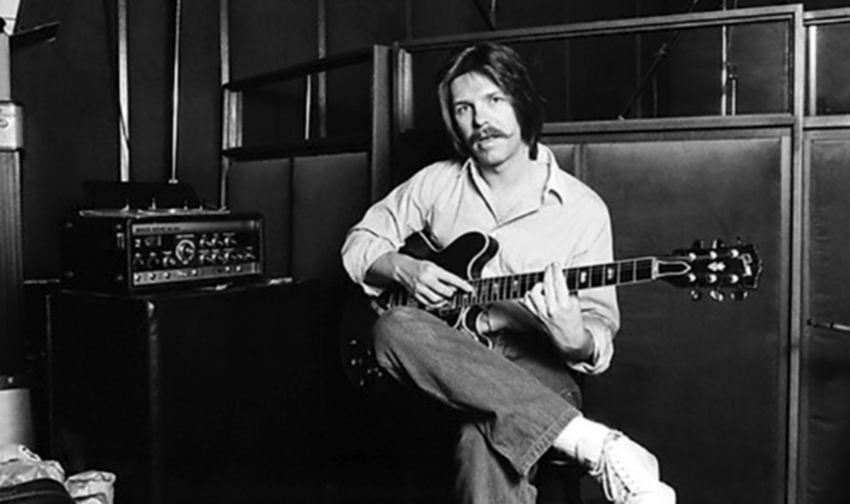
J.G.: In that era, I played a 1963 Gibson 335 for most all electric
guitar studio work. I used that guitar for the session. The amp used
is a Fender Deluxe highly modified by Paul Rivera. I also used an
Orange Squeezer compressor and volume pedal. These days, I mostly
play a signature guitar made by BOSSA (Japan) and run it through my
signature amp (The Rake Head or Jake Studio Combo) manufactured by
Paul Rivera.
Are you thinking something like, "Man, this Jay guy just tossed out
Hollywood jive advertisement which has nothing to do with the story?"
If so, you are half correct - the Hollywood part is the advertisement
but the guitar and amp are exceptional tools!
OK, back to the record date. The following is a block layout of the
set up. Note I was playing in the control room and the amp was in the
studio.
x The orange squeezer was plugged into the 335 output jack.
x A 6 foot guitar cable was plugged between the orange squeezer output and
volume pedal input.
x A 30 foot cable was plugged between the volume
pedal output and amp input.
------------------------------
Sidebar: regarding the volume pedal, you would think no reason to
plug in unless "volume swells' were needed. In this case, it was used
as to eliminate amp noise before the solo entrance and the tail of
the solo. Why? Simple - mixing automation was not yet available.
Before automation, the mixing engineer performed many manual level
moves. Catching track mutes tightly was not priority. With that in
mind, since I was using a distortion gain structure, the noise level
is quite high. As to help out the mixing engineer, I used the volume
pedal to eliminate amp noise when not playing.
------------------------------
B.S.: What studio(s) was it recorded at?
J.G.: Village Recorders, studio "A."
B.S.: Was it done in one/two session(s)?
J.G.: Including set up time, dialing in the sound, breaks, we spent
a total of around four to five hours.
B.S.: Were Becker, Fagen and Katz there throughout?
J.G.: All were in attendance. Walter hung out on the control room
couch and maybe said a total of ten words while we were working. On
the breaks, we hung out in the lounge and all exchanged stories.
This reminds me of something I love about these guys. Both Walter and
Donald are extremely intelligent. Gary is surely bright and the main
connection regarding business land. When the guys talk about most
anything, they might add a twist of intellectual humor that would go
unnoticed by many. Further, these guys are not "Hollywood" on any
level! You gotta love that!
Regarding the non- Hollywood thing, I recently heard some current
artist flavor of the month asked for free concert tickets. The
request was denied. The Dan cats could care less about the commercial
flavor of the month! Most amusing!
B.S.: Did Gary Katz have any input into the process of getting your
solo on tape?
J.G.: No. As mentioned, the dialog regarding the solo was between
Donald and me. Since all of these guys are very intelligent, maybe
they communicate telepathically hence no need for spoken words
regarding musical decisions.
B.S.: Becker and Fagen have since said your solo has an almost
Polynesian feel to it. Was that ever in your mind at the time?
J.G.: No. That information is obviously from the AJA video regarding
the first four bars of the solo (as that was the only section played
before comment). Donald mentioned the Polynesian thing and Walter
then mentioned something like, "Kind of Hawaiian" As stated, keep in
mind some of their "rap" will have sideways humor from time to time.
I recently read a review on the solo - the writer mentioned "Western
style." Once again, this must relate to the double stop bending as
well as the pull off licks.
I enjoy the fact the solo is analyzed within many musical categories
whether a serious evaluation, or not. No way to "bag" this solo as
the following will explain. If a Polynesian, Hawaiian, or a
Country/Western musician was asked to analyze the solo, the odds are
good they would say the solo sounds like a pop solo.
By the way, I must give Amos Garret credit for the double stop
bending concept. In the early seventies, I heard the song, "Midnight
At The Oasis." His solo is outstanding! Other than the double stop
stuff, he plays a very cool phrase that starts with an open E 7th
(3rd, 4th, and 5th strings) and slides/hammers on up the scale (A
cord to B minor to E 9). A delicious ear candy phrase for sure!
B.S.: The track has a great Chuck Rainey/Rick Marotta groove. Were
you inspired by that groove?
J.G.: As mentioned, Rick's feel is outstanding! Chuck always plays great!
The bass part includes nuances that are most delicious. Also, the
muted guitar part feels great! I seem to remember Steve Khan played
that part. Yea, the groove inspired me!
B.S.: Did you have Donald's vocal to listen to on the track?
<
J.G.: Yes. The odds are good it was the final vocal. Man, Donald has
great sounding pipes!
B.S.: "Peg" is your only Steely Dan credit; did you play on any
other of their sessions/songs? If so, which ones?
J.G.: The "Peg" solo constitutes my one and only Steely Dan musical
contribution. This was not the only work call from the Dan camp -
shortly after the "Peg" solo, Irving Azoff called to ask if I would
go on the road with the band. At that point in time, I passed for two
reasons - in that era, I disliked air travel as well as the fact I
was working ten to twenty sessions a week.
Keep in mind that when a studio player goes on the road for months,
when returning to town, the odds are good a few accounts will be
lost. Never forget a studio player has zero work security! If the
player is not available, the next cat gets a chance and if a great
player, the cat gets the account. I know of at least one first call
studio guitarist that never took vacations as to protect his work.
Funny how things transpire - the tour did not happen. If I had
accepted the gig, the word would have hit the streets and the odds
are good some of my accounts would not know the tour was cancelled
unless notified.
Keep in mind that during the time frame of the solo, I thought I
would be playing record dates for the rest of my life hence the
thoughts mentioned. Surely a great way to make a living but shortly
thereafter, I realized that song writing and record production was
the next growth step.
Note: within the TWO AGAINST NATURE ["Steely Dan's Plush TV Jazz-Rock
Party"] DVD, the Dan fan club cat [Pete Fogel] mentions some alumni
players are pissed off they did not get called to work on "follow
up" albums.
I am not one of those players for two reasons:
- Pro studio players loose and gain accounts. If working, that is
the key. Thinking about accounts lost, is useless.
- As a record producer that tries to make quality records, I
understand why the guys experiment with many musicians. Keep in mind
the Dan is not a formula band and not Hollywood on any level.
Further, the guys are famous for not considering the allowed budget
and get away with spending all that is needed! Very rare!
Experimentation is one reason their records still sound fresh.
Moreover, such alumni players cut the gig (if not, they would have
been replaced). As Dan alumni, the odds are good they were hired for
other artist sessions for that reason alone. Sour grapes is useless
on all levels.
B.S.: Did Becker/Fagen tell you of a recording of yours which was a
favorite of theirs and which convinced them to hire you?
J.G.: Not sure if they had heard me play before working together.
Within recent e-mail communication with Walter, he mentioned he has
kept up with my career. Probably the reason I did not get a call
back.
I feel that my musical career runs a similar path as the Dan. I
make Pop records that occasionally include songs with jazz chord
changes and slightly off the wall melodies. Such offerings are not
very commercial.
B.S.: What else, if anything, can you recall about that day?
J.G.: I ate Indian food between the morning double session and the
Dan session. (g)
B.S.: When you left the studio did you know that you had nailed it?
Indeed, did they tell you had nailed it?
J.G.: I thought my performance was just sideways enough to make it on
the record. I can't remember if they said it was a "keeper." Keep in
mind that as a studio player, the performance is not etched in vinyl
(the old days) until the record is pressed for sale.
By the way, when the session concluded, I asked to hear the other
solos. I remember a few were good. When watching the AJA video, other
than my solo, two others were played. The odds are good both were not
the solos I had heard. If those were the only other solos kept on
tape, it is possible the guys may have experimented with other
overdubs (needing open tracks), which would have lead to erasing some
of the kept solos.
B.S.: Are you a fan of Steely Dan?
J.G.: Absolutely! A quick story. I remember working a double session
with Jeff Porcaro and during the lunch break; we went to his pad as
he wanted me to dig a pre release tape of the KATY LIED record. Man,
a pop band that was into hip chord changes with hip melodies, great
lyrics, and great solos! Total ear candy! From then on, I paid
attention to all of their musical offerings.
B.S.: What is your favorite SD song/album and why?
J.G.: FM is my favorite song. I was playing a session at Village
Recorders (studio B) and was told the guys were working in Studio A.
I walked in as to say hi. Donald was working on the vocal and after
he fixed a few things, they played the track in full. I was totally
floored! Further, Walter's solo is his best ever - the last two notes
are total ear candy!
After the play-back, I asked Donald who wrote the string arrangement.
He stated it was penned by Johnny Mandel. Years later, I hired Johnny
to write string arrangements for a Dionne Warwick album I was
producing. I mentioned the voicings he used for FM are most delicious
and wanted similar voicings on one of the songs. He said, "You mean
the voicings you want to stick your **** into." (Edited for a PG
audience).
My favorite Dan album is THE ROYAL SCAM. The last of the raw
energetic recordings. I love Larry Carlton's playing throughout!!!!
Don't get me wrong, all the albums that followed are great but this
is my favorite as a whole.
B.S.: Have you heard TWO AGAINST NATURE and if so, how does it
compare with their earlier work?
J.G.: I bought the CD within the first few days of release. Negative
Girl is outstanding!!!!!!! I have listened to this song at least 50
times so far! About a month ago during my daily run, I ran into Dean
Parks on the trail. We talked about the album and the song mentioned.
Dean summed up this song perfectly - you can listen to the song over
and over and every time, the chord changes are a surprise.
Regarding comparing to other albums, the word on the street is the
recording does not show growth - too much blues stuff. I do not
agree. Again, Negative Girl is worth the price of the CD as the song
is surely a classic! Cousin Dupree is surely a venture into no-no
lyric land. The Gas Light song has a lyric most outstanding! Most all
cuts included ear candy on some level.
B.S.: Walter is very modest about his guitar playing abilities, and
yet he does almost all the solos on their recent album. How would you
characterize his guitar playing?
J.G.: Every quality player is humble regarding their playing. If not,
the growth stops.
Regarding how I characterize Walter's playing, he is blues based
while twisting in occasional ear candy left field melodic licks. Most
important to note he does not sound like any other guitarist!
In conclusion, Steely Dan has broken the rules on all levels but
continues to be extremely successful - no pretty boy looks, music
content that is sophisticated, etc. In my book, the best pop band of
all time!
-------
VITAL INFO ON JAY GRAYDON
-------
Copyright © 2000, 2002 Jay Graydon & Brian Sweet
-----------------------------------------------------------------
Jay and Brian and, of course, Philippe and Kerstin:
THANK YOU very much! GREAT READING!
One of my favorite parts is when Jay talks about how anyone
who has ever played with Steely Dan, should never feel any sour grapes.
AMEN!
hoops
Jay Graydon… ''Mr. West Coast''
Combines Multi-Grammy Talents for a Challenging Ride with "Bebop"
Artist Interview by: Ron Miller at Jazzreview.com
Jay Graydon is a much-celebrated artist wearing many hats, producing a staggering body of work that encompasses a full spectrum of
disciplines in the music industry. This body of work transcends rock, pop and jazz with equal vigor and success. Mr. Graydon has been
awarded two Grammy wins and ten more nominations for songwriting, performance, arranging, engineering and production duties. While
somewhat an enigma, Jay is like a cat with nine lives, always re-inventing himself while landing on his feet after changing musical directions
and duties.
Jay Graydon’s latest project is simply titled, “BEBOP.” This latest CD is a fire-driven collection that offers great interplay between stellar
players, in a “fun” and relaxed setting that has some really great moments of jazz improvisation and conversations. Graydon has come full
circle from the time he was a young child and spoke about his favorite music. The first thing you hear on “BEBOP” is Jay Graydon’s father
posing a question to Jay on a live radio program his father hosted. Jay’s answer to his question was “bebop,” and he’s stated his return to the
music with this energetic release.
In order to fully appreciate Jay Graydon’s career, one would only need to browse his website and see his achievements and awards. What I
found so refreshing was the fire that came from “Mr. West Coast” and the energy that oozes from the disk. While editing a fruitful career
would do some injustice to such a great talent, I will introduce Mr. Jay Graydon to you with this brief introduction:
Graydon has performed on soundtracks to “Grease” and “Lady Sings the Blues,” while penning film scores to “Ghostbusters” and “St. Elmos
Fire.” Jay is the guitarist soloing on “Peg” from the Steely Dan release, ‘AJA’ which etched a signature in pop/rock music history
forever. He co-wrote “After The Love Has Gone” and “Turn Your Love Around,” which both received Grammy Awards for Best R&B song. Graydon
also produced Al Jarreau, which garnered much attention as Best Engineered Recording and Producer of the Year nominations for his
expertise. He is also running his independent record label, Sonic Thrust, and serving the music industry as a music consultant who helps
bridge technology and art together. If this edited listing isn’t enough…Graydon is working on a series of books about recording techniques
with Craig Anderton. It would be a sure bet the information in these books will be gospel, given the preacher!
In our discussion over a great career and quest for even more success, I couldn’t help feeling like I’ve had the opportunity to speak with a
great master of music. Jay is candid, excited, and full of information about his knowledge of what works in the music industry. Graydon
definitely likes a challenge and is currently adding educator, industry consultant, and author to his Grammy Awards and Gold & Platinum
certifications. Jazz students will be able to perform with Jay and his stellar band mates with his “Music Minus One Series” called "JAM with the
Band," CD’s for guitar, sax, piano, bass and drums. Could you see and hear you grooving and soloing with Jay and Dave Weckl? Let’s look into
the mind and hands of the music master, while we gain some insight into how a creative mind can touch the collective heart of music peers,
the nation, and the world. A beautiful mind indeed!
JazzReview: Greetings Jay, I’m glad to speak with you about your latest recording project, “Bebop,” and go to some great highlights of your
important impact on the music scene as a guitarist and producer. We appreciate your time.
JazzReview: When you approach a recording project of original material, it must be hard to focus on which style you are going to be
packaging because you are so talented, and equally versatile in so many different genres of music.
Jay Graydon: I thank you for your kind words. Regarding "focus", that is not a problem after I decide upon the style of music. Typically, pop
music is the type of album I record as an artist. The “BEBOP” album happened quite by accident. I get called to consult and Beta test product
from time-to-time. Marcus Ryle (chief designer of the ADATs and much more, and the co-owner of LINE 6 (guitar amps), typically brings me
into such projects. I needed to record a project as to beta test the ALESIS M20s. I considered recording a pop record, but that would
typically use 16-bit samplers for drums, etc. I decided to record a bebop album as the recorder format is pro and needed real players as to
show the sonics in full.
On the pop side of things, around February 25, 2002, I am releasing a pop album that was not available in the states and most other
territories. The album is entitled “Airplay for the planet,” and includes singers such as Joseph Williams (TOTO), Bill Champlin (Chicago),
Sherwood Ball, Warren Wiebe, and Bill Cantos. This album is quality pop along the lines of Steely Dan and the like.
JazzReview: Could you elaborate on your process of evaluating your focus for any project and how "BEBOP" became a full circle return to
your initial roots with your father?
Jay Graydon: When I produce an artist, the key is to know what the artist is about musically. The next step is to take them to the next
level without hurting their core audience, meaning, “how do I get more sales and still keep them happy?” For the most part, I feel I have
done a good job. I took Al Jarreau from total jazz into POP/R&B/AC, similar with the Manhattan Transfer and a few others. The bottom line
here is to take chances and hope I first- guessed correctly. In most cases, I did my job.
Regarding my "BEBOP" album, my Dad was in his twenties when bebop surfaced. He was a great pop singer of his era, but not a jazz singer per
se. Since he was very musical, he appreciated bebop and opened me up to the style of music at a very young age. This must have been
subliminal as I do not remember the content as a kid, but in the "rap" with my father on his TV show in 1950, on my 2nd birthday, I state, "I
like bebop!"
JazzReview: Jay, you have always had a great sound and I believe that is one of the strongest quality a player, especially at your
level, can have. As a player, how do you approach getting into a great sound from the roots up?
Jay Graydon: The never-ending story! Obviously, it starts with the guitar. I like low action and light strings. I adjust the neck of the
guitar to be almost straight (just a sight back bow). Most important that the high "E" string does not “plunk” out when playing high up
on the neck (around the 12th fret and past). This is most important when using a clean sound as with the “BEBOP” album. I decided to
record "direct" using an Eddy Reynolds’ direct box that has not been available for many years. I have been looking for Eddy for years
with no luck. If anyone knows how to find him, please drop me an e-mail at my website.
When going through many guitars for the "BEBOP" CD, I learned something. As mentioned, I want the high "E" (and other strings as well) to
sing up high. One of my guitars has a fingerboard that slightly angles down around the 12th fret. This really helps the issue
mentioned! Since then, when getting frets dressed on guitars by John Carruthers, I have him file slightly more around the 12th fret and
higher. The key is to find the point where the neck bow starts coming back up and then smooth out and down from there to the
end of the neck.
When listening to the "BEBOP" record, you will notice what I am talking about, meaning when I play up high, there is very little
"fret out." It occasionally happens when I picked too hard, but for the most part, the notes sing.
Regarding a good distortion sound, obviously the amp is very important. I like a smooth mid- range tone without too much top end. My Rivera
signature amps have such a tone. These are now only custom built by Paul. Anyone interested can go to rivera.com and
Paul will build one.
The way I set up these days, in this era, is I always overdub as to have control over the sound. If hired to play solos, it usually requires a
distortion sound. The best way to do this is to have the signal to the guitar amp with no effects. The reason being is pitch shifting and delays
cause the amp head and speakers to "sweat" in an unfriendly manner. If using the effects after the amp mic, this gets rid of the problem.
Note that I am in the control room. I use my Bossa signature guitar (I am now looking for another signature guitar deal), and plug an Orange
Squeezer compressor at the output. The Orange Squeezer output goes into an Ernie Ball volume pedal input. The volume pedal goes into the
amp head. The amp bottom is in the studio (another room) and is miked. Miking details will be available very soon in a book series that I am
writing along with Craig Anderton, along with full recording techniques.
The mic is routed into a mixer input and bused to a recorder track. The mic module is also assigned to two buses: one routes to a harmonizer,
and the other routes to a deal line. The harmonizer returns to a non-used mixer module and the delay returns to another non-used mixer
module. Both mixer modules are assigned to the same recorder track as the mic. I set the harmonizer slightly sharp, and set the delay line to
45 milliseconds. I blend in the effects to taste. The bus output to the recorder gets slightly compressed through a GML compressor.
Block diagram: Guitar to Orange Squeezer compressor, Orange Squeezer to volume pedal, volume pedal to amp input, and amp head speaker
out to speaker bottom in another room.
Amp miked with Shure SM 57…mic patched into mixer module input bused to three buses…one for recorder track, one for harmonizer, one for
the delay line. Harmonizer and delay line returns to two unused mixer modules. Both harmonizer and delay line get assigned to recorder track
bus. Recorder track bus patches into GML compressor. GML compressor output patched into recorder track input.
JazzReview: Bebop has some great guitar sounds, not to mention the burning solos throughout. I was impressed with how you and the
players come across as a band, and not just a bunch of seasoned players just laying down a session.
Jay Graydon: Thanks man! I ran down the sound thing as mentioned above. Regarding the playing, most of the guys in the band rarely play
bebop, so the energy and fun factor really sticks out.
JazzReview: When I listen to "BEBOP" as a collection, I sense you had a really great time with this project. With your earlier success with
Grammy Awards and songwriter credits, you must feel like you have even more to say now as an instrumentalist. I’ve missed hearing you on
the "Thicke of the Night" talk show. I’m glad you’re back.
Jay Graydon: Man, I seem to be answering questions before you ask. Yeah, we had so much fun playing the stuff. I never thought I would do
an instrumental album, but as I mentioned, this happened quite by accident. Will I do this again? That depends upon the sales. Making a jazz
record is fun, but selling such a product is tough.
JazzReview: Were the arrangements for "BEBOP" penned recently or did you get the inspiration over a long stretch of time before
recording?
Jay Graydon: I wrote about half the songs in a few days. The others were written with Bill Cantos, and that took a few days as well. The
arrangements were simply chord charts with the melody written out. There were a few things written out to catch and some of the stuff was
worked out on the session. The tracks were all recorded in one night and typically, only two or three takes per song.
JazzReview: The band really cooks on all the numbers! Beside you, there is Dave Weckl on drums, Dave Carpenter on bass, Bill Cantos on
piano and Brandon Fields on sax. You guys play well together. This would be a treat to see live. Do you have any plans to tour around the
country with this line-up?
Jay Graydon: That won't happen, as all the guys in the band are involved with many projects.
JazzReview: I thought your treatment of the Star Spangled Banner was fantastic and seemed to be like an original version, not derivative of
any other I’ve ever heard. The rippling harmonics were really beautiful and gave a sensitive touch to the anthem. This piece showcases your
great touch.
Jay Graydon: Here is the story. I was in Japan promoting my album, "Airplay for the Planet." I was asked to do a video for a major TV show.
They asked that I play the "Star Spangled Banner" starting with a melodic chord melody thing and then break into a Jimi Hendrix thing. I spent
a few hours in the hotel working out the chord melody thing. When I got back to L.A., the song came to mind and I finished the chord melody
arrangement in full. I never thought I would record the arrangement, but when I recorded the "BEBOP" album, a few of my guitar pals said I
should record the arrangement. Most bizarre is that the track has major meaning in this era!
JazzReview: I like the stop time phrases on the head of "Tubs". This piece really lets Dave Weckl showcase his varied swing rhythms and
swing dynamics. The band is really jamming on "Tubs", while your sound is really thick and the harmony guitar lines work like a horn section.
Jay Graydon: Yeah, this song was written to feature Dave. This is the only song in which I used a distortion sound. I wanted to use the front
pickup and most of my amps are set up for the rear pickup, meaning the front pickup sounds too thick and mushy in distortion land. My Cruise
amp has a channel blend option that allows 2, 3, or 4 channels to be blended. When in blend mode, the sound gets smaller since blending
needs this as to not spread out. I used a clean sound, blended with a distortion sound, that resulted in note definition along with distortion.
JazzReview: Jay, You have had a lot of success in various formats in music. There really isn't any other instrumentalist that has such a varied
music industry appeal. You’ve been able to capture awards for production, engineering, songwriting and with your instrumental prowess. Do
you miss the songwriting now or have you passed into a phase of falling in total love with instrumental music and your guitar?
Jay Graydon: Instrumental music does not sell as well as vocal stuff. I truly love playing jazz. If the album sells well, I would do others. In the
meantime, I am back to writing and producing.
JazzReview: Your solo in the Steely Dan classic, "Peg", is etched in the history of rock music forever. This must make you feel great. I think
you really made a great contribution to the track, but most importantly, you help progress the soloing feel in rock so much. Your work in the
70s & 80s really changed FM radio forever.
Jay Graydon: You are too kind! Playing solos can be scary as I am always on the edge of the chair hoping I can connect ideas that makes
sense.
JazzReview: How does this accomplishment feel to you now?
Jay Graydon: It seems that the "Peg" solo is the one mentioned more than others. I truly love the fact that 25 years later, it still gets
noticed as a quality solo.
JazzReview: Could you elaborate on your quest for great sounds on the guitar? Did your sensitivity to the guitar opens you to production or
did the production help your guitar playing even though your chops were down?
Jay Graydon: I ran that down earlier. Regarding record production, that does not have much to do with the guitar. Arranging and psychology
are the keys here. Also, business dealings are added into the equation.
Regarding guitar chops, when producing an artist, even me as an artist regarding vocal records, guitar playing suffers big time! During the
course of making a record, I play guitar for about a week and spend months doing all of the other production stuff. In the last 20 years, if I
had been playing straight through, I would be a much better guitarist. The trade off was worth it regarding making a living.
JazzReview: The one aspect that hits me when listening to "Bebop", other than the sheer fun of the project, is your energy and passion on
all the performances. That passion is rare today.
Jay Graydon: Just doing what comes from the heart.
JazzReview: Do you have any sage advice or words of music wisdom for someone wanting to work more in the jazz and smooth jazz
markets?
Jay Graydon: Try to not sound like other artists.
JazzReview: I like the humorous feel that you display on the track "Oh Yes, There Will", where you perform over "There Will Never Be Another
You". This is a great tribute to your father and the great musical lineage both of you has recorded for jazz music fans.
Jay Graydon: Many of the titles are intentionally humorous. "My Hot Girth" is an anagram of "I Got Rhythm"."G Wizz" needs no explanation.
"Blow Man" is a common term with old-school jazzers when a cat is told to take a solo. "C Bop" is simply Bebop in "C"."Tubs" relates to
drums.
JazzReview: I would like to mention to the readers that you have an ambitious project for students where they can perform with you and the
band in a "Music Minus One" format. I’m looking forward to trying this out my self. That’s a great idea. Did you get the idea from working with
students or just decide now is the time for some teaching materials?
Jay Graydon: There have been similar recordings over the years, but very little with great players in this era (as far as I know). Since I could
mix in that fashion, I did so. Yeah, players will have fun jamming with this stuff! I am in negotiations with a major regarding release. You can
check my web sight for release information. When released, the buyer gets the "Minus One" CD and a book with all the charts. Also, check out
line6.com They have just launched a play-along, online site for guitar players. Three of the songs are
available on the site! The site has the charts, as well in real time.
JazzReview: Thanks for your time Jay. We really appreciate you shedding some light on your latest activities and the music of "Bebop". I've
had a blast listening to your work over the years and who knows, maybe another Grammy is around the corner. Best regards and take care.
Jay Graydon: My pleasure. Hey, another Grammy is always welcome! By the way, one more thing, I am now consulting for D'Addario regarding
their cable line called "Planet Waves". This stuff is great for all instruments and consumer-to-pro recording studios!
For more information on Jay Graydon and his massive discography, log on to his website, and for copies of his exceptional
"BEBOP" CD, try this store. Fine!
Sounds of Timeless Jazz Interview
This interview is conducted by Paula Edelstein for the October 2001 issue of
This project was an accident so to speak. Many years ago, I had the good fortune to meet and work with Marcus Ryle. Marcus is a
genius designer (as well as a quality keyboard player). He now owns LINE 6 along with Michelle and their digital guitar amps have
changed the guitar world for sure. As to back up in time, his previous company, FAST FORWARD DESIGN, designed the ADAT recorder
series for ALESIS (and many other products). Note the ALESIS design team was involved as well. Marcus and ALESIS have always
trusted my thoughts regarding gear design as well as my bug finds when beta testing the gear.
When the M20 pro ADAT was on the design table, I got my way with a few major design features such as the “hard throughput” (analog
monitoring if an analog signal thus eliminating delay caused by analog to digital converters/digital to analog converters) and
meter bridge error light. When the M20’s were ready for sonic testing, since I would beta test, I decided that since the format
was pro, using samplers, drum machines, etc., would not show the quality of the design. This led to the need of recording a real
band. It could have been a pop recording but that would not show off the sensitivity/dynamics of real acoustic instruments in
full. OK, electric guitar is not a true acoustic instrument but I wanted to play on the project.
Since I have jazz roots (kind of), I decided to record a bebop jazz record. Note I totally trusted Marcus/the full design team
and the bugs found when recording never hung me up meaning no data was lost/corrupted. Further, the sonics of the recorders are
ear candy!
Not as a full ensemble. Except for Dave Carpenter, I have known these great musicians for quite some time. Bill Cantos is a good friend
and we have written many songs over the years. Some of the songs are on the BEBOP album (just released) as well as on my last pop
album, AIRPLAY FOR THE PLANET (soon to be re-released with a new song). Bill also plays with my ALL STAR BAND that tours Japan and
European pockets once in a while. Note that Bill is a great singer as well!
Brandon has played solos on a few albums I have produced over the years and I have always loved his playing. Dave Weckl and I became
friends through Jay Oliver. Jay is an incredible keyboard player I occasionally work with. Also, Jay had written songs with me for
the AIRPLAY FOR THE PLANET album and also went out with us on one tour.
When recording the BEBOP album, always best to ask the drummer what bass player he wants to play with. That led to Dave Carpenter. Note
that most bass players that play upright bass very well typically do not play electric bass in the same league. In the case of
Dave, he plays both instruments like both are his main ax!
Most important to realize most of these cats do not play bebop for a living BUT love to play this stuff! I was so impressed regarding
the musicality and energy! To quote one of my best friends, Kenji Sano, (a great bass player and producer), "You guys sound like
young cats!"
The odds are good this band will not play live since all cats have so many things happening. Even in LA, scheduling is next
to impossible when all are in town!
The next time I tour with my ALL STAR pop band, we will play a few of the songs.
Regarding guitar, Lenny Breau and Joe Pass. This will be obvious to jazz guitar players that listen to the CD. I think along
the same lines as these guys (no pun intended). There are so many others but this album is simply straight-ahead jazz and I love
that style of playing through the changes in an honest manor. Further, Lenny was the inspiration for the harmonic stuff as well
as Ted Greene. Ted taught me how to play the harp like harmonic thing (Lenny Breau concept) many years ago. Btw, the chord melody
arrangement was inspired from Ted’s teachings.
Regarding the melody, as with all the songs I wrote by myself, I worked out typical chord change structures and recorded a
sequence using a piano sample sound, upright bass line, and a simple jazz drum groove. It felt terrible as a sequencer will
never “swing” like real players but no matter; I just wanted a chord structure as to experiment with melodies. Regarding the
melody, I simply played ideas and recorded onto cassette. When finding lines I liked, I would write out and fill in the
blanks. In general, the ideas came quickly. I must say the process was major fun, as I truly love this style of music!
Regarding the title, C Bop, many of the songs have intentional humorous titles: C Bop is in the key of "C" so hence the title
meaning bebop not in the key of "B". See if you can figure out others. (g)
Interesting you picked this song as I feel that this is the best melody of all the songs on the album.
Many great guitarists have gone into the smooth jazz area, as the sales are better than straight-ahead jazz. We all need to
make a living but this project was not based upon money on the outset. Yea, I hope it will generate monies but again, this
project was based upon a chain of events. If the album is accepted in the jazz world, I would love to record in this style
again! This style of music is the most fun I can have with my pants on!
Regarding exploring other types of instrumental music such as swing, fusion, soul jazz, etc., I have no rules and time will tell.
I do not write scores for films but I may do so in the future. Regarding writing songs for films, I am now doing more of
that these days. Regarding writing parts for musicians on recording sessions for film songs or albums, I write out a master
rhythm chart that includes chord changes with rhythm figures (if needed), possibly top notes of the chords or complete
voicings. Also pertinent lines are included. The guitar rhythm figures may be written between the two staves if
needed. Regarding the bass clef of the master rhythm chart, I typically write out a bass part but it is a guide most of the
time, as great bass players will come up with great ideas based upon the sketch.
I will also include text as to state the feel and concept. I might include text notes for the drummer as to catch certain rhythm figures.
When recording the track, if David Foster, Michael Omartian, Robby Buchanan, or Bill Cantos is playing piano, the odds are extremely
good they will come up with ideas that the other players will need to work off of. In that case, we take out or pencils and make
changes as needed.
The bottom line: the chart is a guide and the magic happens on the session!
This question is always difficult to answer. All my songs are like children - I can find faults but I love them all. It’s funny
that time changes the way I feel about the writing and production. I rarely listen to past stuff but when I do, things I
disliked years ago may no longer seem to be a problem, but I seem to find new things I would change. I wish I could listen to
the stuff totally objectively - the wish of all writers!
I got into a summary thing without asking a question: What songs of mine do you like? Your answer will take me off the hook or I will
have to list all my songs. (g)
I typically tour Japan and Scandinavia every few years. I am not sure when the tour will happen next. Most likely after my next
pop album which I will most likely get around to next year.